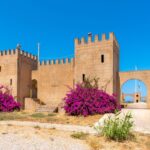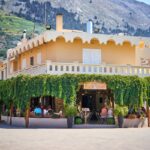
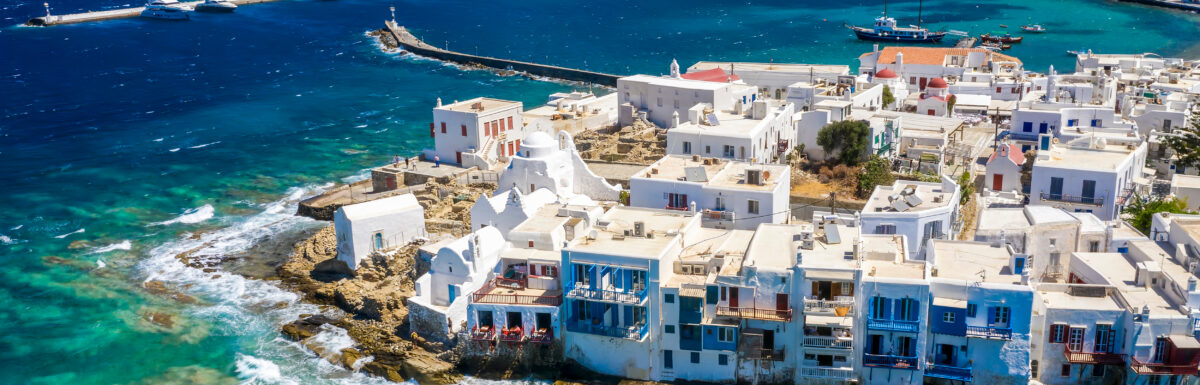
Mykonos, or Myconos, lies at the heart of the Cyclades group and was once a byword for trendy and chic holidays in the Med. Some describe Mykonos as the archetypal Greek island. Even by Greek standards it is an island of extremes, little more than a treeless block of granite, assaulted by the fierce summer meltemi wind and dotted with sugar cube houses bathed in a dazzling white light.
It was once notorious as a hangout for the young, narcissistic and gay who paraded nightly around the main town's harbour. The island's light has somewhat dimmed over the years and it now attracts a more sedate clientele, mostly young couples, many on honeymoon or here to get married through one of the many Mykonos-based wedding agencies.
Though no longer a playground for the rich, famous or artistic Mykonos still attracts the young and colourful. Its cosmopolitan atmosphere has resulted in a wide variety of international restaurants in the main town.
Most of the accommodation has grown up around the hillside behind Mykonos Town and the residential area now covers a large expanse north to Agios Stefanos and south to Plaits Yialos.
With little natural shelter Mykonos suffers more than most from the notorious meltemi wind which can blow fiercely in high summer.
A photogenic port and a string of sandy beaches along the south coast are the main attractions of Mykonos while the nearby islet of Delos is one of the great sightseeing attractions of the Aegean and the Mykonos windmills are probably the most photographed in Greece.

SunIsle specialise in providing great value villa holidays in Greece. Mykonos holiday villas are all hand picked by experts.
Mykonos intro
Mykonos may have shed its more outrageous reputation as a gay paradise, but it is still a very cosmopolitan, noisy and immoderate island. Mykonos is more a place to parade and pose; a place to switch on rather than off and where handbags and hair gel are almost de rigueur. The cost of living is not far off horrendous and few venture here for a cheerful or quiet family holiday. The basic ingredients are an outstandingly beautiful main port, a succession of golden sandy beaches along the south coast where all night beach parties are a regular event and the attraction of the nearby sacred island of Delos.
Mykonos Town
Once stylish and exclusive, MYKONOS TOWN town has now fallen on more downmarket times. The chic bistros and designer bars are still there, but they are no longer the preserve of the jet-set clientele that once sashayed along the resort's untidy quayside.
Mykonos still flatters itself into thinking it is smart - but modern-day visitors come from towns now chock full of trendy bistros and continental cafes. Ciabatta fatigue can quickly kick in. The rest of the world has caught up and it takes more than a trendy reputation to cut the mustard these days.
Unlike most island ports, the main town is built not on a hillside but spread out over a flat plain. The harbour area is split between the fishing quay, with its small boats beached on the sand, and the main port where the ferries pull in and tarmac and concrete make up the view. Most traffic is banned from the waterfront and new building is confined to the outskirts, so the only way to explore is on foot, getting lost in the maze of streets.
On a once-fortified spit of land stands Panagia Paraportiani, probably the most photographed church in Greece. It is, in fact a cluster of chapels fused into what was once described as 'an organic masterpiece of accidental architecture' and there are also the trademark quartet of windmills on the hillside above the town.
Another feature of Mykonos is a pair of posturing pelicans. The town mascot, Petros, was a non migrating resident for 30 years before its death a few years ago and he has now been replaced by a couple of friendly Great White Pelicans that can be spotted wandering about the resort and pose for pictures.
Though attractive enough, Mykonos Town suffers from a shagged out atmosphere by day. Scruffy tables line the concrete quayside where languid waiters tend to the meagre scattering of customers. It is different story at night. Then the boys come out to play - girls too, but mostly boys. Pansied to perfection they cruise the strip and take in a few bars before heading off to any one of a gaggle of gay clubs for which the island is famous.
For meals, most gravitate to Little Venice, a clutch of converted houses perched over the sea. The restaurants may ooze charm but they also put the squeeze on wallets. The picturesque tables come with a hefty price tag.
Mykonos still attracts a more well-heeled clientele as the cheaper end of the tourist market shies away from the rip-off prices. A meal will cost double the average and you will search in vain for a cheap and cheerful bog-standard taverna. You are more likely to dine Mexican, Thai or vegetarian than gyros and chips.
There is a folklore museum packed with island paraphernalia and further inland, perversely, the Maritime Museum with some beautiful models of ships. The House of Helena is decked out with original 19th century furniture, but the Archaeological Museum is a disappointment given the proximity of Delos.
Buses

Agios Stefanos
Agios Stefanos
About 2km north of Mykonos Town is the popular beach of AGIOS STEFANOS where many hotels and apartments take the overspill from Mykonos Town.
This is very much a family beach of good sand, with plenty of tavernas and cafes, both behind the beach and a little inland. The resort is located just around the headland from the new marina at TOURLOS.
There are plenty of sun beds and brollies and lots of organised beach sports such as volleyball. There are also plenty of water sports such as windsurfing and water skiing. There are views of Mykonos Town to the south and Delos on the horizon and good sunset views from the west facing tavernas along the shore.
This popular family beach, so near Mykonos Town and on a good bus route can get very crowded in the summer.
Mykonos southwest
The large peninsula to the south west of Mykonos town is noted for the many attractive bays along its coastline but the area's main beaches are a pretty undistinguished lot. A little tatty for some tastes and heavy tourist hotel development has left its mark. It is the proximity to the capital that has made it so popular with developers rather than any intrinsic merit.
Buses

Megali Ammos
Megali Ammos
MEGALI AMMOS is the nearest beach to Mykonos town and often referred to as Mykonos Town beach. The sands are about a 10 minute walk south, on the Ornos road, and not too bad with shallow seas backed by large flat rocks at one end and a sea wall at the other. The proximity to town and the small size of the beach usually guarantees large crowds later in the day and latecomers will be lucky to find a spot.
Small hotels and apartments line the shore, overlooking the beach, and they tend to charge hefty prices for food and drink. This is not a place for those on a budget, though where is on this island? A triple row of sun beds cover most of the sands and there are the usual water sports and facilities.
Buses

Korfos
Korfos
KORFOS is just tot he north of the more popular Ornos beach and has been the target for considerable tourist development, though it is hard to understand why.
There is a beach, but it is a scruffy affair of dirty sand and stone sitting next to a busy little port and with a very busy island rubbish dump nearby. As if that were not enough there is the constant whine of factory noise to add to the delights.
The beach is north facing so it tends to get buffeted by winds and waves can be choppy, to the delight of windsurfers as conditions can often be ideal, but not so pleasant for sunbathers and swimmers.
Buses
Boats
Ornos
Once a pleasant little fishing port ORNOS is the first major tourist resort south of Mykonos Town and is pretty much overwhelmed with tourist development.
It sits on the south side of a narrow neck of land where colonies of expensive hotels cram the long, flat beach which is itself crammed with expensive sunbeds. The sands are ideal for families though, with a gently sloping beach and lots of watersports on offer.
Boat trips to other beaches are also plentiful and many visitors like to use this resort as a good base for exploring the rest of the island. Tavernas and cafes run the length of the beach and there are even more to be found further inland.
There is Korfos beach to the north, but this is a very scruffy affair. The ranks of hotels make for an atmosphere of little charm and some may find this a characterless place to spend a whole holiday. The advantage is the proximity to Mykonos Town and other beaches both west and south.
Buses
Agios Ioannis
AGIOS IOANNIS is thought by many to be one of the most picturesque places on the island of Mykonos. It is best known for many location shots during the shooting of the movie Shirley Valentine.
It is located about 5km west of Mykonos Town heading west out of Ornos on an 'ear-shaped' headland, a little isolated from the other island beaches. There is only a small west facing beach but the setting in the beautiful bay is dramatic with views across to the island of Delos and a small white chapel on the headland to add a picture postcard flourish. It is also one of the best beaches on the island for sunset watching.
The pebble and sand beach is well protected and there are sunbed and water sports here as well as tavernas and cafes. There is a regular daily bus service from Mykonos Town.
Nearby rocks and a collection of small coves add interest and there is a tiny beach at KAPARI for those who prefer more solitude, but it has no shade and no facilities.
Mykonos southeast
The south east coast hosts the island's main beach strip and a succession of popular sandy strips are linked by a long coastal path. Many visitors catch a bus or taxi to the most western beach at Platys Gialos then hop on a water taxi or simply tramp along the cliff path to one of the other beaches. At the height of the season the walkers file forwards and backwards in their hundreds like a long army of ants. Beaches along this stretch tend to be long, straight swathes of caramel coloured sand. Some of the sands used to be entirely, notoriously and outrageously gay as well as completely nude but all are now much more mixed with straight couples and families enjoying the atmosphere. It is still hard to escape the heady waft of hair gel and body perfume, the thump of beach bars and murmuring of innumerable jet skis (apologies to Tennyson).
Buses
Psarou
PSAROU is a more select version of it popular neighbour a little further southeast at Platys Yialos. Around 150m of white sand is backed by reeds and other greenery to make a very pretty and intimate spot overlooked by the stepped terraces of tavernas and hotels.
Alive with jet skiers and jet setters this is a place to preen the pectorals and get a right toaster of a tan. It is at the head of a long gulf that offers good protection for yachts and boats which often fill the bay.
During the high season the beach is packed, especially on days when there are strong winds as the beach, like the bay, is particularly well sheltered. The beach is pleasant sand, though it does dip rather sharply into the sea, so it's not ideal for children.
Buses
Boats
Platis Yialos
PLATIS GIALOS or PLATYS YIALOS used to be a swamp but has now been monopolised by back-to-back hotels lining the long sandy beach. The biggest and longest established resort on the island this is no place to look for a Greek holiday - there is hardly a trace of Greece to be seen here any more.
A long crescent of sand is backed by low hills. Terraced tavernas line the sands which heave with bodies in the high season. The frequent bus services from Mykonos make this the main target of day visitors, swelling the high numbers already staying here.
Watersports abound as do the howling jet skis, so pack some earplugs with the sun cream. This is also the main calling point for small boats taking visitors to the other south coast beaches and to the surrounding islands, Delos in particular. Boats for Delos though leave early, around 8am.
Agia Anna (west)
AGIA ANNA is a quiet shingle beach south of Platys Yialos and across the headland from Paraga beach. It confusingly has the same name as a stretch of sand found much further east near the beach of Kalafatis.
This Agia Anna is a small, west-facing beach of sharp sand dominated by a large hotel complex. A long sea wall provides a backdrop to a narrow stretch of sand with shallow seas.
Surrounding stretches of the coastline are very beautiful and they were used for some location filming on the Shirley Valentine movie. Though less popular than its noisy neighbours Agia Anna still attracts many tourists.
There are a couple of good tavernas, with parking, and a footpath that leads over the headland west to Platis Yialos and fine views over the sea.
Buses
Boats
Paraga
South of Platis Yialos and itself south facing is the small, picturesque beach of PARAGA or PARANGA, so popular it is often crowded with locals as well as tourists. This was a beach well known in the 70's as a hippy enclave. Much has changed since then and large hotel complexes have now been built on the headland.
But Paranga has inherited a laid back, if noisily busy, party atmosphere. Beach bars and restaurants don't shy from turning up the volume to attract the young. The beach is long and flat with rocks offshore in the shallow sea and at each end of the beach to add interest.
It's at the head of a deep horseshoe bay, well sheltered and away from the northerly winds. A line of tamarisk trees at the back provides some natural shade, but most visitors sit among the rows of sun beds, five deep, that sweep around the bay. Hill paths behind lead to the quiet, sandy beach of Agia Anna, only a few minutes away on foot.
As well as hotels at the rear of the beach there are many small apartments dotted around and a large campsite nearby. On top of the regular bus service from Mykonos Town there are daily boat taxis from Ornos and Platys Yialos.
Buses
Boats
Paradise beach
PARADISE or KALAMOPOTHI beach was once the main haunt of gay nudists. It is now more popular with mixed sexes and could even be considered a family beach for the more enlightened.
But don't expect to have relaxed or quiet time here. This is the island's premier party beach. Noisy beachside tavernas pump out dance music ad nauseam and you are never far from a cafe or burger bar.
Paradise was originally made famous by the hippy generation back in the early 70's. It is known today for special events such as full moon parties. Beach parties usually start around 5pm and last well into the night. The closing party in early September is now an island institution.
A large campsite nearby and diving school add to the delights. Otherwise this is a place to lie on the sand and enjoy the aromatic waft of hair gel and aftershave or join the queue for the unisex toilets. The Cavo Paradiso Disco club is south along the headland.
Super Paradise
East of Paradise beach but with no direct easy route to it is the crassly named SUPER PARADISE, also known locally as PLINDRI. Once exclusively gay and notorious for cruising it has lost much of its louche reputation. The textiles have now moved back in force and there are now gayer and nuder beaches to be found on the island.
It still boasts a magnificent beach with crystal clear blue water. The water is deep here though so it is not so popular with families. Nude bathers mostly congregate at the rocky end of the beach.
Many caiques arrive here from daily Platis Yialos to swell the numbers. One of the most visited beaches on the island, Super Paradise is a party beach (a la Paradise) with very loud music belting out from the beach bars. Parties begin about 5pm, liven up at 10pm and often last until the early hours.
Agrari
AGRARI beach is in a hidden cove located between Super Paradise to the west and Elia to the east. It has somehow managed to miss out on the massive exploitation of neighbouring beaches. The main reason is probably the nerve shattering approach down a boulder strewn ravine and the lack of public transport.
The beach is small and rather exposed. It also has a dirty looking stream running across it. But, if you want to escape the crowds, this could be the spot for you as it rarely gets crowded and there are no noisy beach bars belting out disco music. There is a single beach cantina and just one restaurant.
Access is by car or by boat from Platys Yialos and the lack of crowds and noise in this part of the island adds very much to its appeal, while it's busier near neighbour Elia is just a short clifftop walk over the headland.
Buses
Boats
Elia
Once a quiet spot, ELIA was discovered in the mid 90's and building work hasn't stopped since, with most of the cement was poured into a water park nearby.
Regarded by some as the best beach on Mykonos, Elia is a long, broad swathe of coarse sand backed by a steep circle of hills and split by a rocky headland. The sand quickly turns to sharp pebbles under the sea.
Elia is a large and cosmopolitan beach with umbrellas, sun beds and plenty of water sports. It has some very attractive restaurants and tavernas and is usually the last port of call for many of the water taxis that frequent the southern shore.
It's another favourite with gays and there is also nude sunbathing at one end of the beach. Access is easy from the attractive inland village of Ano Mera, just 2 km away.

Ano Mera
Ano Mera
The only inland village of note is ANO MERA. It is one of the few places on Mykonos where you can find something resembling traditional Greek village life.
It has a main square with a kafenion and a taverna. There is also a 16th century red-roofed monastery of Panagia Tourliani which has a fine collection of Cretan icons and an unusual baptismal font of marble.
Just north of the village is the 12th century Palaeokastro monastery in a magnificent oasis setting on the barren hillside.
Kalo Livadi
Further east from Elia and at the end of a wide valley is the long sandy beach at KALO LIVADI, the last port of call for the regular taxi boats that serve the south coast beaches.
It's in a rustic setting on the road out of the inland village of Ano Mera and it's a pleasant enough beach with umbrellas, loungers, water sports, restaurants and bars. The valley behind is particularly scenic and scattered with small white farmhouses.
This is a beach for those who prefer to avoid big crowds and the cruising. It's not exactly quiet but you won't find the music pumping here. This is very much a family beach with people relaxing or wading in the shallow waters. Yachts are usually anchored in the bay. There is a daily bus but it's a 10 minute walk to the beach from the bus stop on the main road above.
Agia Anna (east)
AGIA ANNA is a small, quiet shingle beach that is well sheltered from the northerly winds. It shouldn't be confused with the more developed beach of the same name to the west. This one is near Kalafatis and makes for a pleasant area to stay with beautiful landscape and fine views from the hills.
Small beaches of shingle and stone lie on either side of an isthmus. There are a few sun beds and umbrellas to rent and a bamboo fence that runs the length of the beach to provide protection from any wind.
On the other side of the isthmus is Kalafatis which runs into the beach at TSARNA, a long stretch of coarse sand with a taverna, water sports and a ruck of smart holiday apartments.
Kalafatis
Around the headland and to the north of Agia Anna is the long beach at KALAFATIS. This is a very large sandy beach, mostly free of loungers except for the northern end where there is a large holiday complex. There is a beach restaurant, bar and sea sports. Except for a few hotels there is nothing else.
Clear waters make for some fine swimming and you can catch boats here for DRAGONISI, an islet off the east coast which has many caves some of which are said to be populated by the rare monk seal, though don't hold your breath looking for one as they are very shy creatures and don't enjoy being disturbed by gawping tourists.
The beach is about 2km long and 70m deep with a line of trees behind providing natural shade. The hotels provide tables and there is a water ski and surfing school as well as bicycle and motorbike rental.
Local hotel owners are sensitive to growing environmental concerns and have launched several local clean-up campaigns. The result is a clean and tidy beach.
Lia Ammoudia
LIA AMMOUDIA marks the end of the tourist beaches and the last to be reached by road at 14km from Mykonos town. It is much less crowded that the others and just the spot for a little solitude. Lack of building on the surrounding hills make it feel very isolated.
Bamboo windbreaks line the sandy beach and there are some excellent fish tavernas here. Once a 'hideaway' beach for Greek celebrities it has become much more popular recently, though not popular enough to feel crowded. A footpath to the east goes over the headland to the tiny sand bay at Tsangari.
Tsangari and Frangis
There are beaches and coves beyond Lia Ammoudia but they are remote and will only appeal to the more intrepid. They are popular however with boat parties who use them for beach barbecue trips and cruises.
The most notable are TSANGARI and FRANGIA. All of them are dominated by the island peak of Profitis Illias which, majestic though it is, is sadly marred by ugly military masts and conspicuous radar domes.
Mykonos east and north
Far wilder than the soft south, the northern coastline of Mykonos is for those who prefer a little wild adventure with their holidays. Large beaches are few, exposed to the northerly winds, more difficult to get to and have fewer facilities. But visitors can enjoy wild windswept scenery without the benefits of the background howl of disco music and annoying whine of jet skis. As well as the main beaches there are numerous small coves and tiny bays for those on a bike.

Fokos
Fokos
FOKOS is a superb sandy north facing beach, newly discovered by tourists but still far enough away to remain peaceful and quiet. The beach is large and deep with dramatic rock formations on the headland out to sea.
Fokos surrounded by wild and beautiful scenery and has a small taverna that opens in the summer to serve the growing numbers that venture away from the usual tourist haunts to delight in the deep sands of the bay.
Being north facing, the winds can get very strong and the waves choppy when the wind gets up. As a result Fokos is very popular with surfers but less popular with sunbathers.

Ftelia
Ftelia
The huge Panormos Bay in the north east of the island has three main beaches. The first, at the furthest southern end of the bay and nearest the capital is the increasingly popular beach at FTELIA.
North facing and exposed to the strong winds that whip around the bay, this beach another big favourite with surfers but sunbathers may find it too exposed for their tastes. It has a fine sandy beach for those that prefer a more rugged environment to the soft south. Roads have improved recently and it is relatively easy to get to.
A small beach cantina opens in the summer and there are a few sun beds put out on the sands in the high summer. But there is no bus service so you need a car or bike to get there.

Panormos
Panormos
The second beach is called PANORMOS, just north of Ftelia on the west side of the bay that it lends its name to. Facing east, it enjoys a little more shelter from the winds that can scour the north facing sands though waters can get choppy when the wind does get up.
Panormos has a fine long stretch of white sand that has become increasingly popular in recent years. A slightly ramshackle taverna at the northern end opens in the summer where bamboo and tamarisks offer some shade.
There is little natural shade on most of Panormos beach and the sands do bank quite sharply into the sea. Nudists tend to favour the southern end of the beach and the low dunes that back onto the beach and offer a little more privacy.
There are good walks over the surrounding countryside although, with no trees, it can feel a little lonely and exposed up there. There is no bus service to this part of Mykonos so you need your own transport to get there.

Agios Sostis
Agios Sostis
AGIOS SOSTIS is a wild and windswept beach that sits at the northern mouth of the bay and again a big favourite with surfers. thanks to its exposure to the meltemi winds.
Rollers crash in on a superb sand beach especially in July and August when the meltemi winds are at their strongest. In such an exposed spot the relatively long does tend to pick up rather a lot of litter as well.
That said, the beach is an excellent one - a long swathe of golden sand, shallow water along the shoreline and with scrub and low dunes behind. Small outcrops of rock at one end add interest and there is a good taverna nearby.

Delos lions

Delos ruins

Delos statues
DELOS
The islet of DELOS is one of the most important historical and archaeological sites in Greece. Considered the birthplace of Apollo and Artemis it became the sacred centre of a major cult between 900BC and AD100.
It lies about 10km southwest of Mykonos and is a vast archaeological site pulling in thousands of visitors each year, mainly from Mykonos but from other islands in the Cyclades as well.
Excavations have been going on since 1873 and in 1990 UNESCO put the whole of Delos on the World Heritage Site List. Treasures on the island include the famous Terrace of Lions, marble animals that once guarded the Sacred Way; the Sacred Lake where Apollo is supposed to have been born; the Minoan Fountain carved into the rock and reconstructed in 166BC, several market squares, or agora, (Delos was one of the biggest slave trade centres in the Mediterranean); temples to various gods and magnificent private houses dating from the 2nd century.
The entire island is strewn with marble fragments and wall sections and Delos is considered one of the most extensive archaeological sites in the world. Many cultures have left their mark on the island with shrines to Egyptian and Syrian deities among the Greek.
Many sections of the residential area are remarkably intact and streets are clearly outlined. Mosaics remain from the more opulent houses and doric columns still stand that once supported the upper floors.
Visitors only get a four hour stay on the island, hardly enough to to enjoy more than a fraction of the treasures here. The museum houses the most important sculptures.
Mykonos map
Mykonos is located in the centre of the Aegean Sea about 150km southeast of Athens. It is one of the smallest of the Cyclades group with an area of about 88sq km, a coastline of 82km and a permanent population of 9,320. It is notably barren with a rocky granite landscape rising to two mountain points. There are no rivers of note but dams have been built to contain winter rains. A string of fine sheltered beaches along the south coast make Mykonos a popular beach holiday destination. The main town of Mykonos is on the west coast while the large inland village of Ano Mera is in the east. The nearby island of Delos was once considered the centre of the Greek world and is noted for it's archeological treasures including many fine sculptures and carvings. **** An excellent network of buses serves most of the beaches as do daily boats from Mykonos town and Ornos Bay. Taxis leave from the seafront and rates are fixed. Ferries arrive like buses and you can find one to virtually any island and there are regular early excursions to Delos.
Mykonos weather
| JAN |
FEB |
MAR |
APR |
MAY |
JUN |
JUL |
AUG |
SEP |
OCT |
NOV |
DEC |
|
| 9 |
9 |
11 |
15 |
18 |
21 |
25 |
25 |
24 |
18 |
14 |
10 |
Avg °C |
| 0 |
0 |
0 |
8 |
24 |
30 |
31 |
31 |
30 |
23 |
4 |
0 |
20°+ days |
| 200 |
200 |
250 |
110 |
65 |
20 |
0 |
0 |
10 |
150 |
280 |
360 |
Av rain (mm) |
Mykonos is noted both for sunshine and wind. Summer rainfall is almost unheard of and what rain does fall is confined to the winter months. Mykonos can have as many as 300 sunshine days each year. Arid conditions result in bare, treeless hills with limited natural vegetation. In summer temperatures can occasionally hit the high 30's, though this is often tempered by frequent high winds. Winters are generally mild with an average temperature of 15°C. Winds are mainly southerly in winter with the northern meltemi blowing daily in the summer particularly during July and August. Gales are not uncommon.
- Telephone code: +30 22890
- Tourist police: 22482
- Health centre: 23998
- Port: 22218
- Airport: 51590
- Buses: 23360
- Taxis: 22890 23700, 22890 22400
- Cash machines: Mykonos Town, Mykonos PortTown, Mykonos Airport(2)
- Size:85 sq km
- Population: 9,300
- Season: May - Oct
- Getting there: Mykonos has an international airport. There are many daily ferries from the mainland and to other islands.
- Getting around: Plenty of car and bike hire. There are several buses daily from Mykonos Old Port to main the resorts.
- Water: Drinkable but high mineral content - bottled preferred
- Special interest: Delos and Rhenia islets.
- Island hopping: Good. Daily ferries to many Cyclades islands and to the mainland.
The beautiful Greek Islands are renowned for their spectacular scenery, magnificent mountainous backdrops, stunning sandy beaches and crystal clear waters.
Holidays to the Greek Islands are often most cherished for this combination of sunshine, warm waters and beaches set against truly wonderful scenery.
Whether it is a traditional beach holiday you would like or something with a little more history, you'll find that a break away to the Greek Islands is just the answer!
Mykonos flights
Mykonos International Airport is 2.5km from Mykonos Town and takes charter flights throughout the summer. There are all the usual facilities you would expect at an international airport including a restaurant and shops. Aegean Airlines and Olympic Airlines also operate regular flights to Mykonos from Athens. Flights take about 45min. There are also flights to Crete and Rhodes.
Mykonos ferries
Many ferries arrive at the New Port, which is 2km north of Mykonos Town in the Tourlos area. There are buses and taxis from the port into the main Mykonos Town. Other ferries arrive in the old port which is on the outskirts of Mykonos. Boats also leave from here for Delos and other round island cruises. Ferries arrive daily from Piraeus and Rafina, both regular car ferries and high speed catamarans. It takes 3-5hrs from Piraeus depending on the type of ferry. The route from Rafina is shorter and take 2.5 - 4hrs. The main ferry companies on these routes are Blue Star, Hellenic Seaways and Alpha Ferries.
Cruises for Delos leave almost every day (depending on weather), except Monday. Caiques also leave the more popular beaches. There are also boats from Platis Gialos beach to Paraga, Paradise, Super Paradise, Elia and Agrari. Daily boats also leave from Ornos beach to Paraga, Paradise, Super Paradise, Elia and Agrari.
Mykonos roads
Roads are reasonably good between the resorts. The bus service on Mykonos is provided by KTEL which has a fleet of 26 buses. There are two bus stations on Mykonos. The north bus station is next to the Telephone Office near the port with regular services to Ano Mera, Elia, Kalafatis, Kalo Livadi, Tourlos and Agios Stefanos. The south bus station is next to the Olympic Airways office in Fabrika square with services to Ornos, Agios Yannis, Platis Gialos, Psarou, Paraga, Paradise and the airport.
The taxi station is located on the waterfront next to the statue of Manto Mavrogenenous. The rates for each resort are displayed on the board.
Mykonos photo galleries
If you would like your photo gallery here then email details. It takes 10 photos to make a gallery and they can be of the whole island or of a particular resort.
For examples see photo galleries for Alonissos, Skiathos and Corfu
Mykonos websites
A personal pick of websites on Mykonos
Mykonos Hotel Reviews : See hotels and apartments with reviews and reports in Mykonos
Mykonos Greece Town Guide : Foxy's photos and guide to Mykonos town and harbour
Go2Mykonos : Welcome to Go2Mykonos - travel guide to Mykonos Greece
Islands of Greece : Luxury villa holidays on Mykonos from Greek Island holiday specialists
If you want your site considered please email me
© Copyright 2001 - 2008 Greek Island Postcards

www.greekisland.co.uk - All rights reserved.