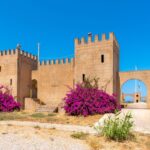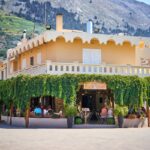
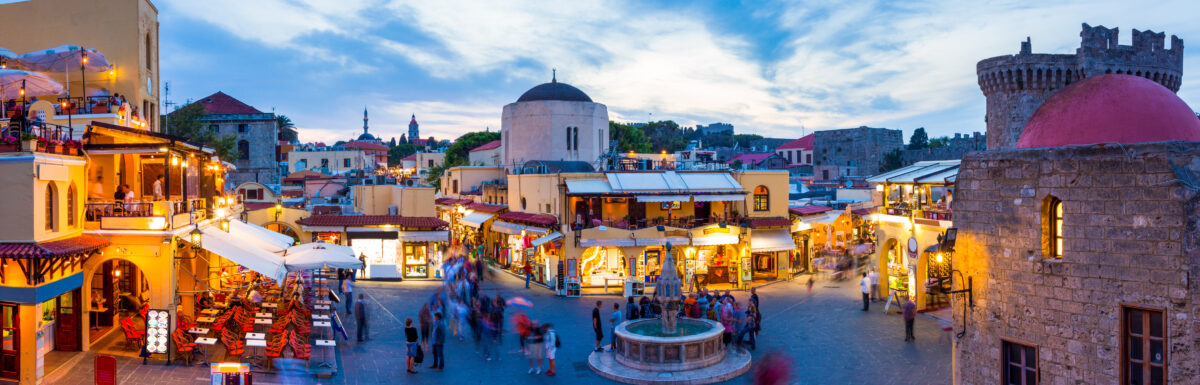
RHODES, Greece, is the Crusader Isle, steeped in ancient history and boasting 300 days of blue skies a year. It lies at the southern end of the Dodecanese island chain that follows the line of the Turkish coast and is one of the most popular holiday destinations in the Mediterranean, attracting relentless waves of visitors from March to November.
Its most popular resorts, such as Faliraki, are now almost totally devoted to package tourism and anyone is search of Greek goatherds and fishing villages has come to the wrong place. Here you will find an insatiable avarice that only an unending supply of cash-rich foreigners can sustain.
The most popular beaches lie to the north and east. Northern coasts are a maze of high-rise conference centres towering over narrow strips of shingle.
Down the east coast, from Rhodes to Lindos, are replicated rows of cement fun palaces. Only south of Lindos do the crowds thin out and the hilly interior and wilder west offer a more authentic glimpse of a Greek island.
Rhodes takes in more annual holiday visitors than virtually any other Greek island. The attraction is not just the long summer season and the sandy beaches but also the remarkably well preserved medieval city of Rhodes itself, castles galore courtesy of the Crusaders and a hilly, forested interior with some lovely landscapes.
The island's classical past can be explored at the ancient sites of Kamiros, Ialyssos and Lindos. Medieval fortresses to rival any in the world can be found at Rhodes, Lindos and Monolithos.
The island suffers from tourism of almost frenzied proportions, laced with rampant commercialism, tons of litter, dirt and dust. Those looking for a more authentic holiday will head south where the island becomes a backwater of dirt roads and ancient villages, though isolated luxury hotels are now cropping up all along the coast.

Daily bus
Boat hire
Car hire
Cash machine

Rodos beach
Renowned for its archaeological treasures RHODES city or RODOS sits on the northern tip of the island with sea on three sides. It's really three cities in one.
The first is the modern city - a monumental heap of concrete which, but for some nice Italian buildings, verges on the bad to awful. The second is the medieval walled city - a national treasure given World Heritage Status by UNESCO and slowly turning itself over to an outdoor holiday shopping mall. The third is the ancient city - now well buried by centuries of development and best viewed in the city's Archaeological Museum.
Rhodes beach is shingle and sand with little in the way of charm despite the setting and the sunshine. Backed by tower block holiday hotels and bizarrely shaped luxury conference centres it has a sort of regimented misery that belies its lovely location.
The beach is usually very windy and the sea can get very rough. Stones, rocks and pebbles are sometimes flecked with oil from passing ships and there is a steep drop into the sea, so it's unsuitable for children. Expect to pay top prices in bars and tavernas.

Mandraki Rhodes
Charmless is too nice a word for this concrete mess but there are interesting Italian buildings near MANDRAKI harbour and remnants of Turkish presence persist at the Mosque of Mourad Reis.
The aquarium too is worth a visit although the stuffed and moth-ravaged monk seals looked a sorry sight. You can catch the scenic holiday train outside the town hall for a tour of the sites with excellent commentary from the driver.

Medieval Rhodes
To explore the old city, the wise will get a map and guide. It brands you dumb tourist of course, but there is so much to see that there is really no alternative. A good place to start is Symi Square near Mandraki harbour for a tour of the CASTELLO where the knights left their most enduring mark.
For a different era in Rhodes' history find the Plane Tree Walk where the clock tower marks the wall that separated the knights' quarters from the rest of the city. The place is packed with shops, bars, cafes, restaurants - you name it, but expect to pay for it.
The main road heads west out of Rhodes Town and long the north cost to the airport at Leoforos Triandon - noisy night and day. Resorts are strung out along this stretch of road virtually without a break. This is the main tourist holiday strip. A narrow shingle beach serves the guests staying in the hotels that dominate the skyline.. As the beach is north facing, sunbathers can expect blasting winds at various times of year and swimmers must often cope with heaving swells and crashing waves.
Daily bus
Boat hire
Car hire
Cash machine

Ixia beach

Ixia by night
Bizarrely shaped hotel or apartment blocks set in their own grounds or with high hedges to muffle the sound of traffic are the staple of IXIA. Here you will find the international luxury hotels that double as conference centres out of season. Typical is the huge Rodos Palace Hotel, with an array of facilities including sauna and masseuse, and the equally upmarket Mira Mare Beach.
Tributes to concrete, and rivals to a Dallas soap set, are the circular Olympic Palace - like a vast flying saucer - and the the Metropolitan Capsis with its two sweeping curves. The Rodos Bay is set amongst pines while the impressive Blue Bay complex has several swimming-pools, sports facilities and a popular disco.
The beach is little more than a narrow strip of shingle lining a busy airport road. It can get crowded in high summer as the hotel rooms fill up. There are restaurants and shops along the esplanade, a children's playground and a couple of watersports centres where they hire out surfboards and jets skis.
The wind can get very fresh and parasols are used as much for protection against the wind as the sun, while children may prefer hotel pools to the choppy seas. For sunbathers there are views across to Turkey, if they can cope with the non-stop whine of passing mopeds.
In the evening, crowds stroll out of their plush hotels for a pleasant walk into Rodos. After dark, the hotels, bars and eateries on the main road are lit up like a sci fi film set. Neon signs are as likely to suggest smorgasbord or burgers as they are moussaka or souvlaki.
Surprisingly, there are a few tavernas offering authentic Greek food and music, but you will find the locals away from the touirst traps and in the village of Tris (turn left just beyond the Miramare Hotel). There are supermarkets and shops for self-caterers, and a couple of quiet roads run inland from the neon tat. Here you can still find rustic smallholdings and cattle in the fields.

Trianda
About 9km from Rhodes Ixia merges with more back-to-back 1,000-room hotels at TRIANDA or TRIANTA, another resort dominated by large luxury hotel complexes and holiday villages that really have more in common with Spain than Greece.
The beach is a very long, narrow strip of shingle and sand still lined by the busy and noisy road behind. There are loads of sun beds and the usual watersports. Litter appears to be a problem here, especially along the hotel strip. The further along the coast you go the worse it gets. Rubbish lines the kerb and skips can sit there full of uncollected junk.
Walking along the road is quite unpleasant as traffic hurtles past and youngsters show off with their motorbikes skills - or lack of them, depending on your age and viewpoint. Trianda does have a large and bustling village which retains some local atmosphere despite the surrounding high risers, though it's not particularly picturesque.

Ialyssos
High above the resort of Trianda is one of the island's most noted beauty spots at IALYSSOS on the plateau of Filerimos. The hill is studded with cypresses and pines and was the site of one of three ancient cities of Rhodes. In 1522 Sultan Suleiman used Ialyssos as a base for his assault on the Knights.
This was once one of three great city states that ruled the island. The ruins are rather meagre but it does have third century temples to Zeus and Athena. Filerimos is visited more for the heavily restored church of the Virgin Mary - built by the Knights on the site of a Byzantine basilica - and the monastery, an Italian restoration of the original.
Reached by a flight of steps bordered by cypresses, the monastery and its domed chapels feature the coat of arms of the Grand Master d'Aubusson. Beneath the ruins of a small Byzantine church is a tiny underground chapel with 14th century wall paintings. The monks sell their own liqueur, known as sette, made from seven local herbs.
Modest dress is essential for a visit here - no shorts, plunging tops or swimwear. From the monastery there's an uphill path to the southwest of the hill, along which are 14 icons representing the Stations of the Cross. Stunning views and a riot of flowers make this a very popular with photographers and nature lovers.

Kremasti church
KREMASTI, a little further along the coast road, is hardly a resort but a busy run-of-the-mill village with rooms, apartments and a few package hotels. Still expanding, it has a wide pebble beach with the usual sun-loungers, parasols and watersports.
The beach is steeply banked pebble and stone, making it most unsuitable for children. Kremasti is right a the end of the runway with flights every 12 minutes or so, day and night. It gets frenetic on Wednesdays and Saturdays, the main transfer days for package tours.
The tree-lined village square is dominated by a striking church and lined with shops. The village is famous for its Panayieri, or Festival of the Virgin Mary, on August 15. There is a giant street market, fiesta and funfair. And the Panhellenic Craft Fair is held here from August 14-22.
The nearby inland village of PASTIDA is worth a visit, an oasis of calm among citrus and olive groves with a smattering of small shops and tavernas.

Tholos
Further west along the coast road, and at the other end of the airport runway is the inland village and coastal resort of THOLOS or THEOLOGOS. We are still in luxury hotel land here but the shingle and sand beach soon flattens out into a wide expanse, backed by scrub and low dunes.
The exposed beach is a favourite with windsurfers at it bears the brunt of the northerly meltemi wind in high summer. The wind is fine for surfers but can be a bit of a trial for sunbathers as there is little protection, with few trees or hedges for shelter. The crowds tend to thin out here despite being in high rise country.
The village centre is about 1.5km inland and set on a hilltop. It may be a little out of the way but the village does have much more of a traditional Greek atmosphere than can be found to the east, with some typical island architecture among the shops and tavernas.

Fanes
Even further west along the coast road is the village of FANES, just west of Soroni, with a picturesque harbour and a flat isolated beach dotted with tamarisk trees for some natural shade.
We are getting out of large hotel territory here and about 30km from Rodos city. The beach is long and flat, mainly fine sharp sand and shingle with a couple of decent tavernas at the back of the beach. Windsurfing and kitesurfing are hugely popular here, given the wide flat sands and the northerly exposure.
As conference centre hotels dominate the north west coast, the other main tourist area outside Rhodes City is to the northeast. A main highway snakes down inland to Lindos following the line of the coast and at every sand and shingle bay along it is now a major tourist holiday resort. These resorts vary from fun-filled playpens, like Faliraki, to upmarket kitsch, like Therma Kalithea.

Koskinou
KOSKINOU and KALITHEA make up a line of hotels that run south, about 10km out of Rodos. Sun loungers, already heavy with residents of nearby hotels, are swelled each day by visitors from the town. The area is not to be confused with Thermi Kalithea - the revamped former spa that sits on a rocky outcrop to the south.
The beaches here are dominated by self-contained, all-inclusive, holiday hotels. They squat side by side along a beach, which although reasonable, is by no means the best on Rhodes. It is mainly sharp sand and pebble, though more patches of good sand can be found as you head south to Thermi Kalithea. There are no hidden coves or quiet bays to be discovered along this shore. This is all-inclusive hotel holiday territory, and it shows.

Thermai Kallithea

THERMAI KALLITHEA, also variously spelled Thermi, Therma, Thermae and Kalithea, Kalithia or Kallithea, was originally a health spa was built in the Moorish style by the Italians in the 1930s.
The dramatic, decayed setting and kitsch architectural features, including domed pavilions and pink marble pillars, make it a favourite venue for fashion photographers. A major restoration has breathed new life into the holiday resort which is approached down an avenue of pines. Palm trees offer shade on a small shingle beach while sun loungers are scattered around a small lido. Buildings are illuminated at night to add a Disney-like glitz to the pseudo oriental atmosphere.
A nearby cove is the target of many scuba diving excursions from Rodos and 15 minutes walk away is the beach resort hotel of Aldemar Paradise with various watersports. On the road to Faliraki a left turn down a dirt track leads to several small coves. The sea is deep here so you'll need to be a decent swimmer to get the benefit. Each cove usually has a few sun beds and a beach taverna that often gives the cove its name. A succession of grim hotels on the main road leads to Faliraki beach, a 20-minute walk away.
Blue Flag beach
Daily bus
Boat hire
Cash machine
Scuba diving

Faliraki beach

Faliraki bars
Once a tiny fishing village - and some brochures actually claim it still is - you would be hard put to find a fisherman in FALIRAKI now. Often dubbed 'lively' in the brochures the resort, about 15km south of Rodos, is in fact little more than a noisy teenage play pen.
Jet skiing, go karting, bungy jumping are all on offer to please the daily influx of frolicky young visitors whose idea of fun is getting stoned on fizzy lager and making as much noise as they possibly can. And noise there is, brain-addling at night as the bars and clubs wind up to full power. The din is in evidence several kilometres away.
Beaches are a grey, gritty sand and packed with bodies from dawn to well after dusk. Food here is as plastic as you would expect and the only good meal to be had is snapped up by millions of mosquitoes homing in from the nearby lowland to gorge on the bare teenage flesh. Drinks cost up to six times supermarket prices and street touts for the clubs and bars can be persistent and aggressive.
Perversely, recent holiday hotel complexes have adopted a Cycladic village theme for those wishing to enjoy the 'Greek experience'. If you have a two-watt bulb for a brain and an ever-open wallet you will feel very much at home with the majority of visitors in this Greek version of the Spanish costas.
Faliraki water park is also nearby, one of the largest in Europe, and offers those bored with the beach a day out on water flumes and slides at a reasonable price. It can get crowded though and young children need to be looked after. Food and drinks here are also better value that Faliraki.

Ladhiko
Just south of Faliraki is the small pebble-beached cove of LADHIKO or Ladiko where many scenes from the noted war film The Guns of Navarone were filmed. It is amusingly dubbed the Anthony 'Queen' bay by owners of the many excursion boats that visit.
The 'Queen' title is in homage to the film's star actor Anthony Quinn, who once bought some property near here. More prosaically named Ladhiko or Ladiko, the cliffs are huge and vertiginous but there are only rocks available for sunbathing and there are sharp underwater stones too, so it's not ideal for children.
Above the bay is a small taverna. Another small sandy bay down a nearby dirt track has borrowed the name and cashed in on the visitors with some sun beds and caravan cafe.
Blue Flag beach
Daily bus
Car hire
Cash machine
Tourist train
This must surely rank as one of the most boring beaches in the Greek Islands. White stones and shingle at AFANDOU stretch in one great 7km desolate swathe, just about as far as the eye can see. Parts of the beach are so desolate you would not tether a goat there.
Stone and shingle make up most of the beach, dipping steeply at the shoreline where large and slippy underwater rocks make paddling difficult if not impossible. It is hopelessly unsuitable for children. Some travel brochures boldly boast how you get a beach to yourself - but one look at this monotonous holiday desert and you can understand why. Few visit more than once.
The plucky resort, about 20km from Rodos, does its best to attract visitors with an 18-hole golf course and a tourist train that ferries visitors the 2km between village and beach and across a very busy main road.
Afandou village is the second largest on the island. It is still a working village, though tourism is now the staple trade. Dozens of tavernas and holiday bars line the busy main street which pedestrians must share with busy traffic. Though there is little nightlife as such there is loud music and karaoke from the busy bars around the town square. The biggest problem is avoiding yobbish British families.
Check on the location of your apartment before booking here. Many are sited in scrubland between the village and the beach with a 15min walk either way and a main road that is busy and noisy both night and day. Just outside the village, surrounded by pines, is the monastery of Agios Nektarios, with an immense pine tree and a drinking fountain fed by springs in the surrounding hills.
Daily bus
Boat hire

Kolymbia
Built as a model farm by the Italians, KOLIMBIA, KOLYMBIA or KOLMYPIA, is full of identical houses noted for their overlarge chimney stacks. The approach is dramatic, along an arrow-straight road lined with mature eucalyptus. The resort itself, about 25km from Rodos, is small and is much favoured by German package tour operators.
There is a picturesque rocky cove and attractive beach to the north. The flat beach is mostly shingle with water sports at each end. There are also some sandy coves to the south about 10 min walk away. There is another long but scruffy beach there backed by an impressively ugly hotel complex.
The resort proper has a dozen tavernas and 20 or so bars. There are boat trips to nearby island and a regular bus service to nearby resorts.
Overlooked by a Gibraltar-like rocky outcrop topped by a monastery, the huge swathe of fine, soft sand at TSAMBIKA or TSAMBIKI, also called Tsampiki or Tsampkia, is approached down a precipitous, hairpin cement road. The steep descent of 1.5km or so rules out tourist buses and other public transport, but the beach nevertheless teems with tourists and sun beds are jammed together like playing cards, particularly along the northern stretch.
A beach taverna is supplemented by several caravan cafes offering little more than lemonade, beer, rolls and shady relief from the midday sun. Behind them the sand peters out to a dirt and gravel area that serves as a huge car park.
Expensive sun beds peter out at the southern end which is favoured by hundreds of hermit crabs and shoals of tiny fish. According to legend, barren women had only to climb barefoot up the concrete steps to the tiny white Byzantine church of Panayia Tsambika to ensure pregnancy. As a result many of the island's children are named Tsambikos or Tsambika, depending on sex.
The outcrop overlooks both Kolimbia and Tsambika beach with stupendous views of both and more besides and the surrounded area is protected from development.

Archangelos
If you think the sprawling village of ARCHANGELOS looks as though it has seen better times you would be just about right. Home to a dwindling leather crafts industry it now has a shabby look and, strangely, appears to have been swallowed up by the German package holiday industry.
This is still the largest town on the island outside Rhodes, with about 6,000 living here. Archangelos lies on a low plain surrounded by the mountains Profitis Elias, Karavos and the hills of Kefaloti, Kastro and Anagros.
The first houses at the foot of the kastro date to 1023. The village centre is dominated by the Church of the Archangel Michael. Around it are whitewashed lanes, traditional houses with arched passageways painted in bright colours. Tavernas and bars line the single main street and the village has a 15th century Crusader castle, though little remains except the outer walls.
Nearby are MALONA and MASSARI, two farming villages in the valley of Nethona River set amongst citrus groves.
This is basically the Archangelos town beach. STEGNA or STENGENA is 2km from the village (and 33km from Rodos) down a steep and winding road to a beautiful coastline of sandy bays and rocky outcrops. The beach itself quiet until the boat trippers arrive just before noon. Around 100 are disgorged daily for 3-4 hours.
The beach is mainly sand with odd patches of shingle here and there. Clusters of rock add interest and there are plenty of small coves and rock pools to explore. There are beachfront tavernas and local bars and a tiny harbour at the end of the bay. Small and isolated, the village has few facilities. Only one hotel changes cash and the nearest bank cash machine is in Archangelos.
Only one bus a day and no local taxis make it feel even more isolated. Four mini markets offer the basics. German package tour companies favour this area too and a large hotel to the north of the beach caters for them.

Agathi
Deep, golden sand in a medium sized cove of clear water with a few underground rocks make AGATHI one of the best beaches on the island and about 36km from Rhodes town. A new road peters out to a dirt track where you can take your car on the beach.
The sands are golden and soft and waters shallow making it ideal for children. There is no resort as such, just the sheltered beach, about 600m long, with a string of beach cantinas and a few rows of sun beds. Don't expect too much from the cantinas, only the basics are served up. There are toilets and showers at the cantinas and even a cardphone.
On the far side of the sands is the tiny chapel of Ayia Agathi built into a cave. Camping is allowed at the far end of the beach and, if you prefer quieter beaches without watersports and noisy jet skis, this is the one to head for, though it does get busy with locals at the weekends.
Daily bus
Boat hire

Haraki
Here at HARAKI is a quiet, small fishing port is overlooked by the ruins of Feraklos castle - one of the first on Rhodes to be held by the Crusaders.
A dull promenade separates a row of holiday chalets, shops and some decent tavernas from a long crescent shaped, shingle beach.
There is no village as such but plenty of tourist facilities and lots of apartments and faceless low-rise hotels. The locals are notably friendly and it's also popular with Greeks, which helps to give it the resort a relaxing, laid-back atmosphere that sometimes hard to find on the rest of Rhodes.
Photography is not encouraged at the nearby army training camp. There is a regular bus service to Rhodes town and a couple of car hire firms.
Daily bus
Boat hire

Kalathos beach
KALATHOS is a village on the main road about 6km north of Lindos. There is a very long stone and shingle beach here which stretches along the shore for about 4km. The beach shelves rather steeply offshore, making it a poor place for children but it rarely gets crowded despite there being a number of large hotels nearby.
A cantina, mini market and some tavernas can be found on the road that runs behind the beach. The village is pretty enough with a fine church and it's position makes it a good centre for exploring the island for those who don't want the hustle and bustle of neighbouring Lindos. There is a sprinkling of bars and tavernas.
Blue Flag beach
Daily bus
Boat hire
Car hire
Cash machine
Lindos beach

Lawrence Durrel once described LINDOS as 'of a scrupulous Aegean order, and perfect of its kind'. Well Lawrence, it is nothing like that now. It has inherited the perfect setting - a shimmering violet and emerald pool in a horseshoe bay of golden sand and sheltered by comforting hills dotted with white, sugar-cube houses. But we are now describing a 'perfect hell of its kind' as package tourists blow in like a daily sandstorm.
The beach is very beautiful, but quickly filled by local holidaymakers. The the cars and bikes roar in, followed by tour buses. Then it's the turn of tourist boats and before long the only distinction between the beach and a Tokyo subway is the baking sun beating down on your head.
In July and August, the packed amphitheatre turns terribly hot and airless and temperatures can soar to 120F. With little natural shade an expensive beach umbrella is a must.
Popularity brings high prices and you will pay more for a sun bed here than anywhere in the islands - if you can find one that is. The beach sand is very fine and the bay waters are shallow and well protected so, apart from the crowds, this is an ideal family beach.
The paths down from the village however are exceedingly steep, as is most of the town, and it can be a heavy slog home after a heat-soaked day on the packed sands.

Lindos Acropolis

Sugar-cubed houses clustered above a wide horseshoe bay make Lindos, 56km from Rodos, one of the most photogenic of resorts. The narrow, cobbled streets are pedestrian only and many houses boast beautifully laid out black and white pebble courtyards.
The two big problems are noise and crowds. Buses park bumper to bumper in the tiny square at the foot of the steep hill. Waves of day trippers press through the tiny streets which are simply unable to cope. And just as you think the town can take no more the excursion boats come hooting into the bay full of trippers eager to pant up the hill to the Acropolis.
This beautiful place is so packed you must queue just to pass along the narrow, pebble-paved, serpentine streets. Tourist shops and bars hem in the crowds with a tone that is ruthlessly and relentlessly mercenary. Mercifully, high rise hotels have been banned inside the town limits and discos are confined to the outskirts. But the bars still blare out ear-blasting noise all day, even when they are deserted.
The main attraction for boat trippers is the ancient Acropoli,s enclosed by the walls of a Crusader fortress which is impressive when the visitor swarms have left but a dire experience when surrounded by camera wielding storm troopers. A temple to Athena has capped the outcrop above Lindos since nth century BC.
Fortification by the Knights of St John make for a blend of ancient and medieval with Italian restoration work and Greek cement completing the modern mix. Lindos is noted for it rooftop restaurants which can be found all over the town. Romantic they may be but they generally excel at offering less for more. The food is mediocre at best and the vegetables invariably tinned.
St Paul's Bay
Just south of Lindos, over the headland from the castle is the tiny sheltered ST PAUL'S BAY which used to offer some respite from the hordes but which is now bedecked with sun beds and caravan cafes as the locals cash in on every nook and cranny.
St Paul's bay has only a narrow crescent of sand and the beach is usually buried beneath a forest of sun loungers in the high summer. It is also a regular stop on the tourist boat circuit and a favourite for overseas weddings such is the dramatic setting in a bay almost totally enclosed by a circle of rocks. The saint was supposed to have landed here once - hence the name and the small chapel dedicated to him.
Daily bus
Boat hire
Car hire
Cash machine

Pefkos
Less manic than neighbouring Lindos, PEFKOS or PEFKI is making a brave bid to pull in the tourists with a characterless clutch of shops, restaurants and bars stretched out along a single street. It's about 60km from Rodos and a a place obviously purpose-built for visitors. Apartments and villas have mushroomed over the past few years.
The rather narrow, sand and shingle 1km long beach lies parallel to the road and is approached down a series of narrow tracks through pine woods (Pefkos is Greek for 'pines'). The sands are strung out for most of their length with regimented rows of sun loungers.
At the far end, the beach splinters into a number of small rocky bays with shallow water, making it an attractive spot for families with children.
Beach cafes offer basic menus. There are other small coves to be found by walking north or south. There are buses to Rhodes town every 30 minutes but, without a car or moped, a taxi is the only reliable, if expensive, form of transport.
The atmosphere is overwhelmingly British. There are full English breakfasts, Sunday roasts, Chinese and Indian restaurants, large screen TVs, quiz nights - even the waiters are foreign. It makes a brilliant destination for those who love their chips, beer and karaoke.
Tourists tend to leave the southern beaches to themselves. Poor roads, few facilities and the distance from the capital keep numbers down, although this is changing as the years roll by. Hotel rooms have increased dramatically in the last 10 years as development has been curbed in the more attractive resorts like Lindos. All inclusive holiday hotels are quickly becoming the norm along the coast.
Blue Flag beach
Daily bus
Cash machine

Lardos
LARDOS has a large bay that is fast becoming a major centre on the tourist circuit, if the amount of building work is anything to go by. The beach resort, about 65km from Rodos, is little more than a group of supermarkets, a few tavernas and some car hire firms. A big aparthotel just gone up so tourist liveliness is sure to follow.
The sand is on the gritty side and the water doesn't always look as invitingly clean as other beaches. Many visitors give it a miss and opt for the nearby sandy beach of Glystra. Lardos village is a 20 minute walk inland from the beach where there is a proper Greek community and a wider selection of bars, shops and restaurants. Life centres around the tree lined village square and an impressive fountain fed by springs.
Many bars offer live Greek music but others are turning to dismal tourist-driven karaoke evenings. There are plenty of organised trips to Lindos, Rhodes and island sights to satisfy the growing tourist market

Glystra
GLYSTRA is a small cove with an inviting beach of good fine sand that lies south of Lardos. This 'undiscovered' beach tends to take overspill from more northern beaches at Pefkos and Lardos. The sands are quite deep and the beach makes a long sweep around an attractive bay with the waters shallow, so it's fine for families with young children. Snorkellers can hunt for the shell of a car dumped in the middle of the bay.
There is good parking at the northern end and a family-run cantina opens in the summer, providing sun beds and some good food. The beach, though pleasant enough, is rather exposed with little natural shade, so hiring an umbrella is a must if you don't take your own.

Kiotari
KIOTARI is a modern tourist beach resort backed by hills and, at the last count, four all-inclusive hotel complexes. The beach is quite large at 3km and very sandy at one end, shingle at the other. A couple of cantinas put sunbeds on the best of the sand in the summer.
Most visitors bed down in the middle where there are lots of water sports here, jet skis, water skis ,banana boats, pedaloes, canoes and windsurfing are on offer. There are interesting rock pools to be found at one end of the beach. When the wind is in the wrong direction visitors can suffer smells from a nearby sewage plant.
The resort itself is at the back of the beach, rather isolated with few shops and tavernas and little Greek charm thanks to some extensive holiday apartment building work in the 1990s - tasteful but characterless.
There is no real community here, but it's popular with Greek weekenders seeking to escape the rigours of Rhodes town. There are now several mini-markets, some souvenir shops and a handful of family-run tavernas for those bored with hotel food. There is only one bus a day to Rhodes town so transport is needed if you want to get about.

Gennadi
GENNADI is one vast stone and shingle beach about 70km south of Rodos. Much of the land around here is owned by the church and development has been kept to a minimum as a result. The beach is really just a continuation of Kiotari and good, if you like stone and pebble with scraps of sand here and there.
It is strikingly huge - nearly 6km, and the stones drop quite sharply into the sea, though the waters are clear and good for swimming. A line of tavernas back the most popular parts of the beach and parts of it are now noted for popular, loud and lively parties after a DJ set up at a local beach bar, attracting hordes of youngsters to the area.
If you prefer a more secluded atmosphere, then stroll to the south though you face a long walk if you are based at the northern end of the beach. The village lies above the beach over the main road where there are tavernas, rooms to rent, small hotels and villas. Some large hotel complexes stand rather isolated in a forlorn wilderness of flat scrub.

Plimiri
At PLIMIRI there is a protected, sandy bay backed by low dunes about 85km south of Rodos. This is an ideal spot for those looking for peace and quiet. A small roadside taverna near the harbour overlooks the long sandy crescent backed by bamboo and scrub. Nearby is the the Monastery of Zoodhos Pigi, dating from 1840.
To the south are wonderful, wide and flat deserted beaches, backed by cedar filled woodland, but with no facilities. The best stretches are south of CAPE VIGLOS, usually deserted and most easily reached from a dirt track just before AGIOS PAVLOS where there is an abandoned Italian monastery with an impressive clocktower.
There are miles of sand along this stretch of coast with beautiful, deserted bays to be found, the most notable being at AGIOS GIORGIOS. The sands are good but flat and damp for the mst part, though dry spots can be found and you cannot reach the sands by car. Inland from Plimiri is the farming village of KATTAVIA with fields of cereals and vegetables. There are scattered farmhouses, an old abandoned airport and the impressive cypress-lined roads.

Prassonissi
At PRASSONISI a dramatic 3km spit of sand runs out to sea with the choppy Aegean on one side and the calm Mediterranean on the other. The views are astonishing from a distance but close up the beach tends to be grubby and dirty, not least because of the cars and jeeps that regularly rolled in to park on it.
In winter the seas can join and turn the spot into a genuine island, about 80km from Rodos and 40km from Lindos. Even in summer the strong winds can force sunbathers to seek shelter, though surfers find the spot ideal, especially along the northern shore, and many professionals come here to train. On most days the offshore sea is jam packed with windsurfers.
There are a couple of tavernas at the roadside but neither is cheap. There are surfboards and wetsuits for hire but most visitors bring their own.

Monolithos

Fourni beach
MONOLITHOS castle is a favourite on the tourist route, an impregnable fortress on the southwest coast near Apolakkia Bay and perched on top of a 300ft high precipitous rock overlooking the sea. It was built around 1480 by the Knights of St John and it is certainly an impressive sight, but you must leave your car at the bottom and take a steep 15min hike up a narrow pathway to get to it.
Within the castle walls stands the church of Agios Panteleimon. The village itself is 3km from the rock and is small with just a clutch of small tavernas. The road leads on to FOURNI, the beach at Monolithos, ideal for those who like pebbles, waves and a peaceful setting. Unnerving rock formations add interest. One huge rock looks as though it might topple over onto the tourist sun beds below at any minute.
Nearby are some 17th century Christian caves that have been carved into the rock at Fourni beach, but expect to get lost trying to find them and beware the badly worn steps down to the cave entrances.

Embonas
EMBONAS or EMPONAS boasts the Emery wine plant which produced much of Rhodes' best wine (which is not saying all that much) and there are complimentary tastings for visitors. The red is better than the white which is relatively lifeless.
Endless coach parties snake in between 10am and 2pm and the village itself is riddled with tavernas and tourist shops - a favourite for the tour operator's Greek evenings. The landscape is very attractive with vineyards climbing the steep foothills to the mountains above

Petaloudes

Tiger moth
During July and August tourists outnumber the insects in Butterfly Valley near PETALOUDES which lies about 5km inland from Tholos. The butterflies are actually Jersey tiger moths, Euplagia quadripunctaria, but let's face it, how many tourists would want to visit Moth Valley?
The moths are a well camouflaged and difficult to see except in flight when they show their deep red overwings. The result has been thousand of tourists clapping their hands and even blowing whistles to drive the sleepy insects into the air.
Unfortunately, the moths have come here to rest before mating and the consequence of all this disturbance has seen a worrying decline in the numbers returning each year. Not before time, tourists are being asked to keep the noise down. They moths arrive in their thousands in June, mate in late August and fly off in September.
The 60-minute walk through the valley is pleasant enough, with plenty of shade from the trees and a well marked path through the woods past small pools and over wooden bridges that cross the River Pelekanas. Visitors should wear decent walking shoes as the going can be rough at times.
Epta Pyges
More a lowlight than a highlight, EPTA PIGES or SEVEN SPRINGS is touted as a pleasant picnic spot with a stream and a waterfall. Tourists usually walk to it as the coaches can't get very near, but few are likely to return for a second look. The springs are no more than muddy wet patches of woodland that tend to give off the very damp, musty smell of decayed vegetation.
There is an unlit tunnel carrying the spring water to a reservoir that you can walk through. It is about 150 metres long, the water is ankle deep and the only light is from a shaft half way along. The reward for the walk is a small lake at the other end and you have to wonder why this place is promoted so strongly by tour firms.

Rhodes is the largest island in the Dodecanese at 1,412sq km and lies at the southern end of the chain that follows the line of the Turkish coast. The island is about 90km long and 40km wide. The population is about 117,000 with 53,000 or so living in the capital. The interior is mountainous, sparsely inhabited and covered with forests of pine and cypress.
| JAN | FEB | MAR | APR | MAY | JUN | JUL | AUG | SEP | OCT | NOV | DEC | Temp |
| 11 | 12 | 14 | 17 | 20 | 25 | 27 | 27 | 21 | 18 | 13 | 10 | Avg °C |
| 5 | 6 | 7 | 8 | 9 | 11 | 12 | 12 | 10 | 8 | 5 | 4 | Sun(hrs) |
| JAN | FEB | MAR | APR | MAY | JUN | JUL | AUG | SEP | OCT | NOV | DEC | Rain (cm) |
| 15 | 10 | 8 | 3 | 2 | 1 | 0 | 0 | 1 | 6 | 9 | 14 | Avg |
| 15 | 13 | 11 | 8 | 3 | 1 | 0 | 0 | 1 | 7 | 9 | 15 | Days rain |
A succession of cloudless days are virtually guaranteed from mid-June to September. Days become monotonous with the sun painted onto an ever-blue sky. Temperatures soar regularly to 30C/80F especially in the east and much higher in sheltered spots.
The west and north coasts are tempered by the meltemi wind. Late September and early October can be troubled by fierce storms which often evaporate as soon as they arrive. Tourists have died, however, in the flash floods that can result from sudden downpours.
Otherwise October can be pleasantly warm with the sea at its best for swimming although vegetation has been reduced to cry tinder by now and dust lies everywhere.
December to March bring cold and rain with the odd warm interlude. December and January are wettest as depressions move in, but frost and snow are rare this far south.
Spring arrives early, though March can still be wet and April is notoriously unpredictable. But the island is awash with spring flowers and if early May can be cool and sometimes cloudy, when summer does arrive you can be sure it is here to stay.
The island of Rhodes, often called the Crusader Isle, offers the tourist near year-round sunshine with an average of 300 days of clear blue sunny skies per year. The beaches on the northern and eastern coastlines are where most people on HOLIDAY TO RHODES go to stay because this is where the main resorts are. If it is a quiet and relaxed holiday on the beach with a little culture and history mixed in then it may be worth giving Rhodes a miss and heading to one of the less developed or well-known islands. Otherwise head for the hills in the interior of Rhodes or drive to the more unspoiled western coast for a break away from the crowds.
Diagoras International Airport is 16km southwest of Rhodes City, near Kremasti on the north coast. The airport has expanded in recent years and now handles about 3.2m annually. In addition to regular domestic and international flights there are charters to many countries. Rhodes Airport has a single terminal with 13 check-in desks and eight gates, and opens 24 hours a day. The airport has ATMs. A VIP lounge offers limited business facilities. There are various shops and a cafe, restaurant and bar. Travel agencies and tour operators have desks at the airport.
Though there have been improvements, Rhodes airport is still chaotically Greek. Be prepared for long queues and organized chaos. Surrounding are drab, functional and depressing. There is seating in the departure lounge but it is far from adequate. Flight information is sketchy with little information on terminals and announcements made over a creaky PA system in broken English. As flights can be called simultaneously, it's not always easy to tell which gate to use. Gates are not always easy to find, down corridors with no signs etc. Baggage handling can be seriously slow and its not unusual to wait more than an hour. There is plenty of public transport from the airport with about 30 buses daily to Rhodes City.
Regular ferries and hydrofoils cross to Piraeus and Crete and many other of the Dodecanese group and there are any number of daily trips to coastal resorts, notably Lindos which seems to be included on every boat trip from Mandraki harbour. Hydrofoils are more expensive but more reliable than ferries that can somehow contrive to arrive hours late and leave minutes early.
Road links around the island are not too bad but the further south you get, the worse it gets. Crowded buses serve the east and west coast cheaply and regularly but peter out after Lindos and a car or moped is essential if you want to see the island proper. Hire prices vary but expect to pay double during the high season.
The main road from Rhodes to Lindos is pretty good but after that it can get quite rough with petrol stations few and far between.
Taxis are not cheap and in rural areas have no meter - prices are fixed for specific distances. There are regular bus connections between Rhodes town and most villages, resorts and other places of interest (KTEL), as well as in-town bus transportation (RODA). The terminal for KTEL buses in Rhodes town is at Mandraki.
![]()
Going to Rhodes this year? If you would like to see your photos here then email with details.
It takes 10 photos to make a gallery.
Rhodes Hotel Reviews : See a list of hotels and apartments with reviews and reports in Rhodes
About Rhodes Island : A guide to the island of Rhodes: information, pictures, hotels
Rhodes - the sun island : Information and tips from A to Z and more than 100 photos
Rhodes Photo Gallery: A Day in the Sun - photos of Rhodes by Martijn Heemstra
If you want your site considered email me