Samos Greece | tourist holiday travel guide | |
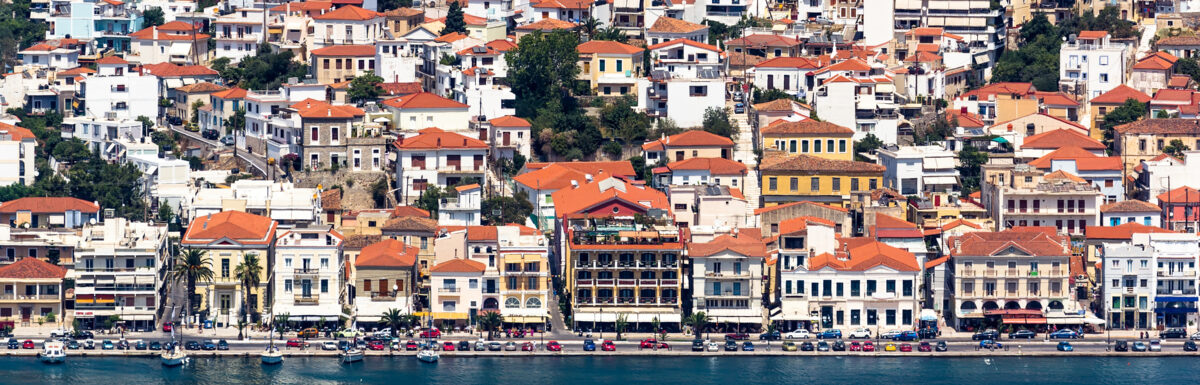
Samos sits at the southern end of the Aegean sea to the east of the Greek mainland and so close to the Turkish coastline it could almost be thought of as part of the Dodecanese group. A large, long mountainous island it was once one of Greece's wealthiest and boasted many architectural wonders of the ancient world. Unfortunately many of the former wonders have fallen foul of cement mixers and hotel developers. In the more popular resorts like Pythagorion and Kokkari, ready-mix has permanently paved the island's glorious past. In other resorts the rough Greek edges have been polished smooth and, like sedate Bournemouths of the Aegean, they appear more holiday village than Greek village - mere meek holiday retreats for the middle-aged. Overview |
| |
| Home Map Print Reviews Galleries Holidays |
Aidona | Ano Vathi | Hera Temple | Gagou | Ireon | Kambos | Karlovassi | Kerveli | Kokkari | Ag Konstantinos | Koutsi | Lemonakia | Limnionas | Manolates Mavratzei | Mourtia | Mykali | Mytilini | Ag Nikolaos | Ormos Marathokambos | Paleokastro | Ag Paraskevi | Planakia | Platanikas | Posidhonio | Potami Pototaki |Psili Amos (E) | Psili Amos (W) | Pyrgos | Pythgorio | Samos Town | Seitani | Tsabou | Tsamadou | Tsopela | Votsalakia | Vourliotes |
| Around Samos Town |
| Gagou | ||||||
| Samos town withers away along the promontory to the upmarket Kalami suburbs where most holiday accommodation is found above the thin and mediocre town beach at GAGOU. There is a narrow atrip of sand and shingle and a few descent restaurants. It's main advantage is the quiet atmosphere - such a contrast to noisy Samos Town yet within walking distance. | ![]() Gagou |
| Ano Vathi | ||
| The road north out of Samos town ends up at the pretty bay and chapel of AGIA PARASKEVI. There is a small pebble beach and fishing jetty and a couple of tavernas that have live Greek music most weekends. The countryside around here is also known for the wide variety of butterflies. |
| Agia Paraskevi | ||
| The road north out of Samos town ends up at the pretty bay and chapel of AGIA PARASKEVI. There is a small pebble beach and fishing jetty and a couple of tavernas that have live Greek music most weekends. The countryside around here is also known for the wide variety of butterflies. |
| Paleokastro | ||
| The road past Ano Vathi leads to the scruffy hilltop village of PALAEOKASTRO where there is a bakery, a small shop and some decent out-of-town tavernas that are well worth a visit in the evenings. |
| Mourtia | ||
| . A left turn off the road south from Samos town leads to the village of KAMARA where there are some basic tavernas and from there it is a steep climb to the 18th century monastery of ZOODHOKOS PIGI set in thick woods on sea cliffs above the fishing hamlet of MOURTIA and with outstanding views across the straits to the Turkish coast. There are small, deserted coves to be found and the water is particularly clear. A great place for a picnic but there are no organised facilities here. There are two beaches nearby known as 'Large Laka and Small Laka that can be reached on foot. |
| Kerveli | |||
| Tracks lead down to the small, quiet and strikingly pretty KERVELI where a line of shady tamarisks line the shingle beach, though behind them is a crop of ugly squat apartments that unfortunately spoil the view inland. This is a secluded spot and a car is needed unless you intend to crash out on the beach every day. There are some fine walks to be had in the area with a few good tavernas to relax in at night. | ![]() Kerveli |
| Planakia | |||
| Nearby is the larger but more mediocre stone covered beach at PLATANAKIA. The resort takes its name from its splendid plane trees that are found in the area. The beach is stone and shingle backed by a cement harbour wall. Pebbles drop sharply into the sea. The resort has a handful of lively tavernas used by package tour companies for 'Greek Nights'. | ![]() Planakia |
| Posidhonio | ||
| Further south is a sheltered cove and fishing hamlet at POSIDHONIO with another unattractive shingle beach, some average tavernas, a few run-down fisherman's houses and, bizarrely, a couple of tennis courts. |
| Psili Amos (East) | |||
| Further east things pick up at the attractive sandy cove at PSILI AMMOS where there are a clutch of good tavernas. However, the splendid beach soon fills up with day trippers from Samos town and the place gets very crowded when the excursion boats arrive. Watersports are popular here but there are strong offshore currents in the straits and notices warn of danger if you stray too far from land. There is an area of salt marsh and a lake, which dries out in the summer. This is a good bird spotting area and flamingos can be seen early in the season. | ![]() Psili Ammos |
| Mykali | ||
| The neighbouring kilometre of windswept sand and shingle at MYKALI has attracted three large package holiday hotels despite the area being a protected nature reserve where storks, herons and flamingos are frequent winter visitors. The beach is stony but turns to sand under the water. |
| South Samos |
| Pythagorio | ||||||
|
Tarted up for middle market tourist
tastes PYTHGORIO is about as Greek as a Sandals' holiday village.
Renamed in 1955 to honour its most famous native son Pythagoras it was
originally called Tigani, Greek for frying pan. The name almost certainly
refers to the shape of the harbour than the summer temperatures, though
the south facing port will sizzle in July. Cobbled streets and walled mansions
make up the village centre while the waterfront is an uninterrupted queue
of tavernas, bars and cafes all crammed with tourists paying heavily over
the odds. Despite the crowds and a twee harbour heaving with fishing boats
and leisure craft, Pythgorio still manages a relaxed atmosphere, helping
to make it the island's premier resort for the past 30 years. Once a big
tobacco growing area it turned to olives but today there are more tourists
than trees. The place is mercifully free of English 'yoof' but buser services
are poor and you must travel via Samos town. There is a museum, disappointing given the local archaeological heritage, which has some sculptures, ancient statues, Roman busts and some 6th century BC grave reliefs. Unfortunately a large number of finds seem to be hidden way in storerooms so you won't get to see them. A not very imposing 19th century Logothetis castle sits on a hill to the south west, built mostly with stone pilfered from ancient temple sites. A spread of big hotels is parked well down the beach taking advantage of the huge swathe of coarse sand and shingle that stretches westward for several kilometres and is overflown by aircraft coming in to land at the nearby airport. |
![]() Pythgorio ![]() ![]() Logothetis Castle
|
| Potokaki | |||
| About 4km away at POTOKAKI,
a hefty clutch of holiday hotels hug the shore. They include the weird
Doryssa hotel complex of air conditioned bungalows all laid out like a
fake Greek village, complete with street names and artificial village square.
The only thing authentic are the prices and the low flying airliners. But
the sand and pebble beach is attractive enough, though the hotels ensure
it is rarely uncrowded and sun beds are laid out in regimented rows over
every spare patch of decent sand. If you are the hotel-pool-beach type
of tourist this could well be your cup of tea. I would rather eat my own
brains with a wooden spoon. |
![]() Potokaki |
| Ireon | |||||
|
Once a tiny, dust blown fishing hamlet, IREON is
now a minor resort with a small gaggle of hotels and tavernas. Large hotel
building is prohibited so this is a relatively quiet spot if you can ignore
the roar from the nearby airport. The long sandy beach gets scruffy and
stony in parts and new buildings have failed to shake off an edge-of-the-world
atmosphere. But there are good tavernas backing the beach and locals here
are especially welcoming. The place has a relaxed feel you can soon get
used to. Many wander along here to escape busy Pythagorio. |
| Tsopela | |||
| South of Ireon along a rough
dirt track is the scenic sand and shingle cove at TSOPELA which
sits at a the mouth of a quite magnificent gorge and sports a beach cantina
and sun beds in the summer months. It also attracts a good many boats in
the high season. Inland the countryside still bears the scars of the forest
fires though every year they lessen and there are still quite a umber of
hillside villages worth a visit. MYLI owes it's name to the many
watermills that were once here. They have gone, but the thick lemon groves
and cool streams are still there to enjoy. CHORA was a capital of
Samos until the 1850s and it is still a lively place with plenty of good
tavernas. |
![]() Tsopela |
| Mytilini | |||
| At nearby MYTILINI is Greece's only palaeontology museum, housed in the village hall and containing fossilised remains of a large prehistoric giraffe-like creature believed to have died out around 10m years ago. Other exhibits include the skulls and teeth of prehistoric hippos and lions and what claims to be the fossilised brain of a 13m year old horse. Not really what you expect to find in a Greek hillside village but there it is. | ![]() Bones at Mytilini |
| Pyrgos | ||
| Below Myli sprawls the large hillside village of PAGONDAS with an even larger public fountain in the majestic main square. A scenic road around the mountain passes through SPATHAREI which still offers some of the best views on Samos. Almost lost in the pines and at the head of a huge ravine is the village of PYRGOS, the centre of the island's honey production. |
| Koutsi | ||
| Heading down to the coast again is KOUTSI where shady plane trees, mountain streams and good tavernas would make an excellent spot to cool down on a hot summer's day, were it not for package tour companies who have also 'discovered' it and now make the chance of an empty table and a quiet meal a remote possibility. |
| Ormos Marathokambos | |||
| The coastline opposite the islet
of Samiopoula is wild and relatively inaccessible until you reach the well
shaded beach at VALLOS, also known as ORMOS KOMEIKON, which
has a long bay of pebble with occasional breaks of sand. Its relative remoteness
makes it a favourite with naturists and there are a few apartments and
couple of small tavernas. A few kilometres west is the fast emerging tourist
resort of ORMOS MARATHOKAMBOS. It's a working village, busy but
friendly with a good range of tavernas. The beach is as stony as it is
undistinguished but it has a relaxing little port. There are some small
coves to the west if you prefer sand. Above all, it has more Greek atmosphere
than most of the other resorts put together and is a pleasant place to
enjoy a relaxed sunset meal. Above lies the lovely village of MARATHOKAMBOS perched among the vineyards and overlooking a steep valley. A word of warning - park your car on the outskirts of the village. The streets are so narrow you will have to reverse your way out. |
![]() Ormos Marathokambos ![]() Marathokambos |
| Kambos - Votsalakia | ||||||
| The island's longest beach is found at KAMBOS, also known as VOTSALAKIA. The beach of fine sand and a few stones is most attractive though it turns to shingle in the sea and is marred by an ugly and sprawling tourist resort that has grown up behind it. The saving grace is the glorious backdrop of Mt. Kerkis and when the beach gets crowded which is not too often, they give every reason to go hiking off into the surrounding countryside where there are many fine walks. There is a good range of the usual shops in the resort and plenty of bars, all low key and closing around 1am. |
|
| Psili Ammos (West) | |||
| A little further west is another PSILI AMMOS, less crowded than its more popular namesake in the east and another favourite with the naturists. The shore shelves gently into the sea from the fine sand and shingle beach and high cliffs behind offer shelter and seclusion. However, a fair sized apartment complex has sprung up in recent years and they charge far more for sun beds than is usual. |
|
| Limnionas | ||
| Beyond Psili Ammos is the small sheltered cove of LIMNIONAS. Smart villas are dotted about the hills and the faintly preposterous Samos Yacht Club (given there is never a yachts to be seen) gives the place a sniffy upmarket air. Nevertheless it is a quiet unassuming place. Rocks shelves gently down to the shore and into the sea but beyond them the swimming is good |
| North Samos |
| Seitani | |||
| The western coastline of Samos is wild, remote and dominated by Mt. Kerkis, the island's highest mountain at 1,473 metres. There is a neat but uninteresting farming village at KALLITHEA and small cove beyond at VARSAMO, signposted from the road down a rough dirt track. The beach has multicoloured pebbles formed from volcanic ash, a couple of small caves and a beach cantina in the summer. The road runs out at the village of DHRAKEI but tracks lead down to a couple of wild and beautiful beaches on the north facing coast. This area is a refuge for the rare Mediterranean Seal Monachus Monachus, the protection of which has done much to help preserve the area's outstanding natural beauty. The first of the wild beaches is MEGALO SEITANI which, as the name suggests, is the larger of the two. It is also the more dramatic, sitting at the mouth of the Kakoperato Gorge, and the more popular because of its calmer waters. The next bay hosts MIKRI SEITANI a small sand and pebble cove, windier and more exposed but still protected by rock outcrops. Nearby is the 11th century Byzantine Church of the Transfiguration. | ![]() Mikri Seitani |
| Potami | |||
| The major beach resort here lies a little further east at POTAMI. An excellent sweep of sand and pebble is well shaded by trees which also provide welcome cover for several good tavernas nestling in the shrubbery. The proximity of the large town of Karlovassi means the beach can get crowded in the high season and at weekends. Inland is an area well known for rock pools, waterfalls and tour buses. A sequence of bitterly cold pools tumble down the hillside. If you don't mind being frozen then by all means wade into them but you have been warned. The track following the pools eventually leads to the 11th century church of Metamorfis believed to be the oldest on Samos and beyond that a narrow and precipitous path leads to a small Byzantine fortress whose poor condition makes it hardly worth a look but does offer splendid views back down the valley. Back on the coast is the dull beach resort of LIMANI whose popularity owes much to the proximity of the major town of Karlovassi next door. | ![]() Potami ![]() |
| Karlovassi | |||
| The island's second largest town
of KARLOVASSI is much overshadowed by the other island resorts of
Samos town and Pythagorio. It is also less obviously attractive, though
far more peaceful and a good base for exploring the fine beaches along
this part of the coast. More a cluster of villages than a town it can be
roughly divided into four parts each with its own character but all spotted
with some of the most absurdly large churches I have ever seen. The busy
waterfront is lined with tavernas and bars and has all the trappings of
a rapidly growing resort. The town beach is a poor affair and can get very
crowded. The new district (Neo Karlovassi) is an untidy mess derelict factories
and warehouses - a hangover from the days when the town was a major industrial
tanning centre and worth a look if you are interested in industrial archaeology.
It is a bustling urban centre of shops, schools, libraries and a medical
centre. The middle district (Meleo Karlovassi) is a sprawling suburb of
modern housing redeemed in part by a fine attractive main square with a
huge fountain and good restaurants perched beneath the shady trees. The
old district (Paleo Karlovassi) is furthest inland and a picture postcard
village where delightful old red-tiled houses horseshoe around the end
of a lovely valley. |
![]() Karlovassi ![]() |
| Agios Nikolaos | |||
| East of Karlovassi is a long stretch of attractive but fairly inaccessible coastline dotted with a few minor resorts. AGIOS NIKOLAOS is a small fishing port now 'discovered' and peppered with new apartments. It is still a very attractive place however and has a couple of excellent fish tavernas. | ![]() Agios Nikolaos |
| Agios Konstantinos | ||
| Further along the coast is AGIOS KONSTANTINOS, a pretty coastal village sadly marred by a shoreline esplanade - a dreary monument to the concrete mixer. The rocky beach is walled in like a D-Day beach and now so ugly even the locals apologise for it. However the village itself is a delightful mix of attractive stone houses and large tavernas. |
| Platanikas | ||
| Just along the coast is PLATANIKAS which takes it name from the huge plane tree that dominates the main square. Several large tavernas make this a favourite with the organisers of 'Greek Night' tour buses. |
| Tsabou | |||
| .Around the headland are a string of fine beaches starting with TSABOU, or TSAMADOU, a pleasant bay with a shingle sand beach but rather exposed and often swept by strong winds like many along the northern shore. More sheltered and even more peaceful is AVLAKIA. The beach is only a thin strip of white stone but there is an excellent string of romantically placed tavernas along the shore. The hill villages inland from here are some of the most attractive (and most visited) on the island. | ![]() Tsabou |
| Vourliotes | |||
| The main village in these parts is VOURLIOTES. Full of atmosphere flower decked walls and brightly painted doors and shutters the village also has a very pretty central square and several decent tavernas serving local delicacies such as chickpea pies and a sweet Moskhato wine. The village is surrounded by pines and vineyards. Around 2km south is the monastery of Panagia Vrontiani built in 1566 with fine frescoes and a magnificent iconostasis. | ![]() Vourliotes |
| Manolates | ||||||
|
The neighbouring village of MANOLATES is not as pretty but does have a magnificent situation at the head of a steep canyon and it is a popular starting point for trek up Mt. Ambelos. There is a marked trail to the top at the end of a dirt track beyond the village past some charcoal pits and a convent. It is not a particularly difficult climb and you are rewarded with some stunning views. | ![]() Manolates |
| Aidona Gorge | ||
| One of the island's most popular picnic spots is the AIDONA gorge where tourist pavilions have been built among the ivy covered trees and nightingales are said to sing on spring evenings. |
| Tsamadou | |||
| Back on the coast, the beaches get steadily more crowded as you approach the resort at Kokkari. TSAMADOU is a beautiful long sickle of sand and pebble that features on almost every advertisement for Samos. Difficult access fortunately left it relatively unscathed and it has managed to escape the civic 'improvements' enjoyed by so many other beaches. There is an excellent taverna shaded by trees and the beach is a favourite with naturists. | ![]() Tsamadou |
| Lemonakia | |||
| Around the headland is LEMONAKIA,
smaller and narrower than its neighbour it is also too close to the main
road for comfort and overshadowed by an ugly cafe cum taverna. It makes
a pleasant alternative but can still get very crowded in the summer and
can be occasionally swept by strong winds. |
![]() Lemonakia |
| Kokkari | ||||||
|
You have heard it all before. Once a quaint fishing village, KOKKARI is now a tourist heaving nightmare. The third largest resort on the island what substantial beauty it once had has now been safely buried beneath the cement. Like Samos town the waterfront is lined with tavernas and bars to catch the soaring tourist trade. Even the tavernas are now making way for more lucrative cocktail bars and night clubs. A bypass has relieved the place of the heavy traffic but not much can be done about the heavy tread of visiting tourists. It is still cramped and claustrophobic with noisy music bars to add to the din and too popular to provide a peaceful atmosphere. This is not a way to spend a quiet or cheap day out. A rock outcrop separates the old village from the modern resort and the mainly shingle beach sweeps westward. Exposed and windy, this is a favourite venue for windsurfers and there is some serious surfing done here. The steep wooded hill behind are some of the most attractive on the island with pines and vineyards sweeping right down to the sea shore. It is inland that more traditional delights are found with many splendid trails through the woods. |
![]() Kokkari ![]() |
SAMOS HIGHLIGHTS |
| Hera Temple | |||
| The Pythagorio area is also the centre of the island's archaeological heritage - at least what sorry traces of it are left. The place thrived under the rule of the tyrant Polykrates in the latter half of the 6th century BC. With the aid of a gifted engineer Efplinos and around 4,000 slaves from Lesbos and Naxos he ordered some astonishing building work. He built 6km of defensive wall bristling with 35 towers and 12 gates stretching all the way to Cape Fornias. He also built a huge harbour mole on which the modern jetty still stands. And he drilled a 1km tunnel through the mountain to bring water in and provide a secret escape route out should his walled city, as it was then, come under siege. Slaves dug from both sides of the mountain to meet bang in the middle, a supreme technical achievement given the primitive tools and lack of scientific equipment at the time. Today, paying visitors are allowed around 100 metres inside to see their handiwork. But the tyrant's greatest work was to the west at the end of a 7km marble-paved Sacred Way said to have been lined with around 2,000 statues. It was a magnificent temple to the mother goddess Hera, supported by 134 columns and believed to rival the Parthenon itself. Had it survived it would have been a wonder. But the glorious temple has been long lain to waste as fire, invasions, earthquakes, pilfering and out-and-out neglect. Excavation didn't begin until 1985 and the remains are, quite frankly, a sorry site. Ninety per cent of the Sacred Way is now buried beneath an airport runway, a road and a fine crop of holiday hotels. The remarkable tunnel is collapsing and all that remains of the temple is a single tottering pillar standing in an incoherent maze of scattered rubble. Nevertheless, the place crawls with visitors. Nearby are the remains of some Roman baths, said to have been used by Anthony and Cleopatra The baths are a good size but pretty dull with a few unimpressive standing columns and hypocausts. |
|
| Mavratzei | |||
| Higher in the hills is MAVRATZEI which, along with neighbouring KOUMARADHEI, is known for its fine pottery, notably the daft Pythagorean Cup which tips all its contents over your lap when too full. Buried among trees is the 16th century monastery of MEGALIS PANAYIAS which houses some of the finest frescos on Samos. Higher still is the monastery of TIMIOU STAVROU (Holy Cross) dating from 1582 with an outstanding screen and pulpit and a fine collection of church relics. | Megalis Panayia ![]() |
SAMOS MAP |
Roads and transport on Samos are generally good except in the west where it can get a bit wilder. A massive forest fire swept the island in 1993 destroying much forest although much has now recovered. |
![]() |
SAMOS WEATHER |
| . |
|
|||||||||||||||||||||||||||
|
||||||||||||||||||||||||||||
Samos weather forecast |
|
|||||||||||||||||||||||||||
| Hugging the Turkish coast, Samos enjoys high temperatures throughout the summer but the strong meltemi winds in July and August can bring heavy waves and windswept ands in north coast resorts |
SAMOS FACTS |
| Telephone +30 ( 02730) | Cash machines | ||
Tourist police: 27333 Tourist office: 28130 Medical centre: 27407 Airport: 26121 |
Kokkari (2) Marathokambos (2) Mitilini (1) Pythgorio (4) Vathy (2) |
| The beautiful Greek Islands are renowned for their spectacular scenery, magnificent mountainous backdrops, stunning sandy beaches and crystal clear waters. Holidays to the Greek Islands are often most cherished for this combination of sunshine, warm waters and beaches set against truly wonderful scenery. Whether it is a traditional beach holiday you would like or something with a little more history, you'll find that a break away to the Greek Islands is just the answer! |
![]() |
| Pythagoras | |||
| Samos' most famous son Pythagoras didn't actually spend much time on the island. Known today mainly for his geometric theorems, he was during his lifetime equal parts mathematician, philosopher, magician and mystic Surprisingly he left no written records himself and what we know of his teachings come from his students who did. He also exerted a profound influence on later Greek philosophers including Aristotle and Plato and established a 'Pythagorean' way of life noted for vegetarianism, abstinence and renouncing of money and wordily goods. It was a way of life that would be adopted by thousands of followers. | ![]() Pythagoras |
| Pythagoras was born on Samos in the 6th century BC, the son of a wealthy sea trader. Highly intelligent he made the most
of the best education money could buy. But his father died while Pythagoras was still a teenager and soon afterwards the tyrant Polykrates became ruler
of the island. Pythagoras left for Miletus, aged just 18 years, to be taught by the eminent if ancient teacher Thales who advised him to visit Egypt,
then a major seat of learning. Pythagoras left for Egypt and stayed more than 20 years studying astronomy and geometry with their priests and sages. An extraordinary period followed when Egypt was invaded and Pythagoras was carried off to Babylon. Here he mysteriously rose from captive slave to a disciple of the Persian magi studying arithmetic, music and divination. He eventually returned to Samos aged 56 setting up a colony of followers. He preferred a meditative way of life and took to living in a cave, but was constantly pestered to help with public and political administration on the island. Fed up of the intrusions he gathered his most loyal followers and left for Croton in Italy. Here he expounded a philosophy of simple living and meditative though. Followers were vegetarian and ascetic and numbers swelled to around 600 despite an arduous initiation. The most devoted followers, known as Cenobites, gave up all their worldly possessions to the cause and shared everything equally. The sect slowly acquired great wealth and prestige and Pythagoreans were sought to mediate in all disputes thanks to their reputation for honesty, fairness, thoughtfulness and incorruptibility. Not surprisingly they had their enemies, not least those who had tried and failed to gain entry to the order. One such was the rich and powerful Cyclon of Croton who forced Pythagoras to flee to Metapontum where he later died. The leaderless followers were locked in a house which was burned to the ground leaving just two survivors. Pythagoras is credited with a string of firsts - the first to describe higher geometric solids, to discover the relationship between the squares on a triangle's size (the Pythagorean theorem) and the first to map of musical intervals. His number theories shaped much of the Kabbalah of the Jews and his mystical numbers and are found in magic practices of the Renaissance. Many regard him as the father of such wide-ranging disciplines as numerology, geometry, musical theory and psychotherapy. He was also said to be able to predict earthquakes, to talk with animals and to practise hypnosis. All this and Pythagoras left not a single book behind him. |
SAMOS PHOTO GALLERIES |
||
|
|
||
SAMOS SITES |
|
Samos Hotel Reviews : See hotels and apartments with reviews and reports in Samos Samos Holiday Travel Guides :Foxy's guide to beaches and walks on Samos holidays in Greece .. Samos Beaches : Guide to beaches on Samos with information, including directions. It includes some of the less known and secluded beaches as well as more popular ones ... - If you want your site considered email me |
||
A tourist holiday travel guide to the Greek island of Samos |